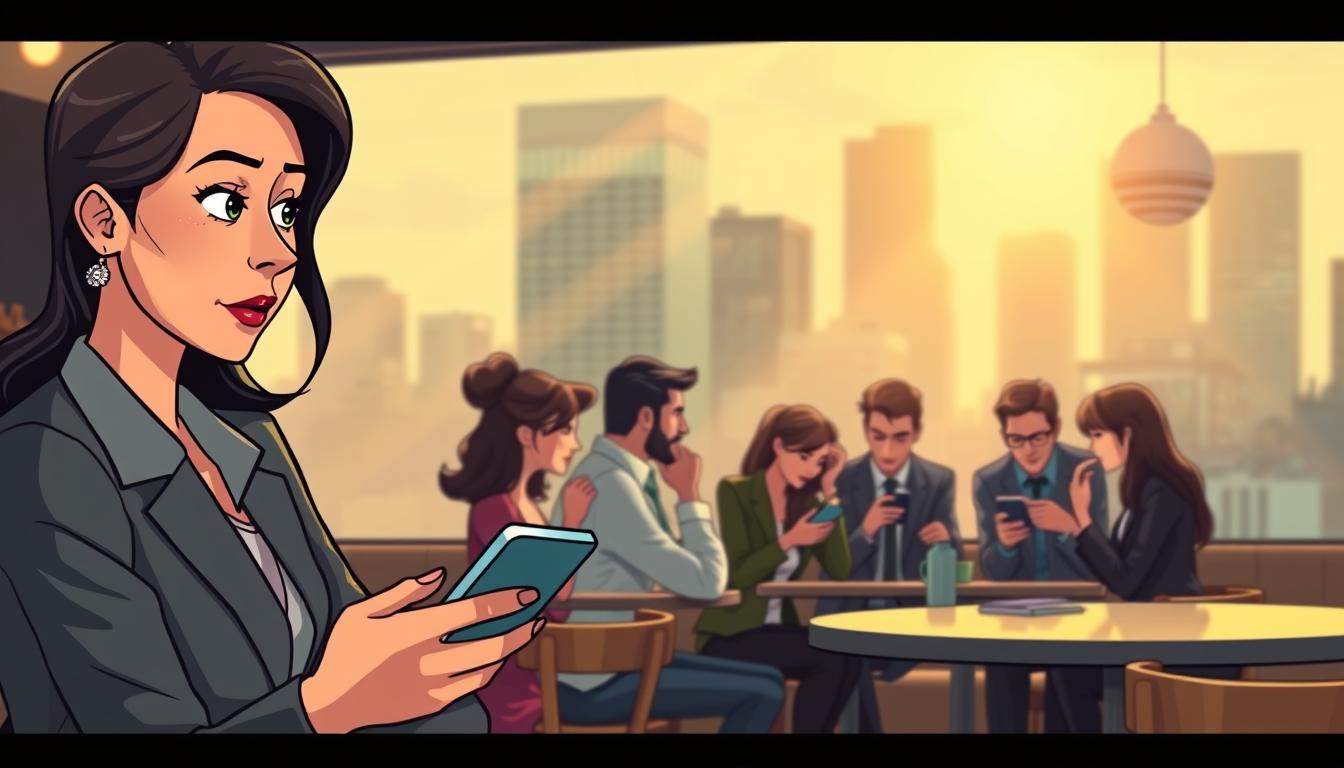
Modern dating has changed a lot. In the past, people met through friends or in their community. Now, many turn to their phones to find love. This shift moves dating from human-centered courtship to a system driven by data.
Algorithms now play a big role in how we connect. They mediate one of our most intimate experiences. This change raises important questions for society. Are we giving up a part of our humanity for the sake of efficiency?
This article explores a core idea. A strong reliance on technology for romantic decisions can diminish our emotional agency. We risk becoming dependent on machines for basic human connection. The promise of infinite choice can sometimes lead to loneliness and confusion.
We will look at how this affects individual relationships and broader patterns of community. Technology offers empowerment, but it also creates new challenges for finding genuine love.
Key Takeaways
- Modern dating has shifted from organic meetings to algorithm-driven platforms.
- Technology now mediates the deeply personal experience of finding love.
- Over-dependence on dating apps can reduce our personal emotional skills.
- While offering more choices, algorithmic systems can lead to decision fatigue.
- This shift impacts not just individuals but how society forms connections.
- Understanding this balance is key to maintaining healthy romantic autonomy.
Introduction to Algorithmic Mediation in Romance
Romantic connections today follow a path shaped by digital intermediaries. This represents a fundamental transformation in how people seek love and partnership.
The shift moves us from organic meetings to calculated introductions. Our most personal decisions now pass through computational filters.
Defining Algorithmic Mediation in Modern Dating
Algorithmic mediation describes how software systems intermediate between potential partners. These systems filter and shape romantic encounters.
They transform spontaneous human connection into calculated interactions. The process collects vast amounts of user information to predict compatibility.
Historical Shifts in Romantic Decision-Making
The roots of computer-assisted matchmaking go back to 1965. Harvard student Jeff Tarr created the first matching system using affinity calculations.
This early work laid groundwork for today’s dating platforms. The historical transformation moved from family-controlled courtship to individual choice.
Now we see algorithmic curation claiming to know us better than we know ourselves. As philosopher Michel Foucault observed, sexuality became “an object of analysis and target of intervention.”
Modern dating platforms represent new mechanisms shaping how people understand intimacy. This isn’t just technological change but a restructuring of human connection.
Evolution of Romantic Decision-Making in the Digital Era
The landscape of finding love has undergone a seismic shift in recent decades. What was once organic has become systematically curated through digital platforms.
From In-Person Encounters to Online Matches
The numbers tell a compelling story. When Match.com launched in 1995, only 2% of heterosexual couples met through online dating. By 2017, that figure skyrocketed to 39%.
This represents one of the most dramatic social transformations of our time. Traditional pathways to romantic connections have declined sharply.
Meeting through friends, family, work, or community activities became less common. The way we form relationships fundamentally changed.
Even the apparent rise in bar and restaurant meetings post-2010 reveals a deeper truth. These were typically couples who met online first, then chose public venues for initial dates.
For younger generations, organic relationship formation is unfamiliar territory. The gradual build of familiarity has been replaced by instant profile evaluation.
This evolution represents more than just a new medium for dating. It’s a complete restructuring of how romantic relationships begin and develop in modern society.
The Rise of Dating Apps and Commodification of Love
Mobile applications have redefined courtship, creating a system where human connection follows the rules of consumer psychology. These platforms treat romantic pursuit as a marketplace where users browse profile options like products.
Swipe Culture and Secret Attractiveness Scores
Tinder’s hidden ELO rating system assigns secret scores based on who swipes right. Your desirability increases when attractive users like your profile. This turns human worth into a points-based game.
The algorithm creates invisible leagues where compatible people never meet. These hidden patterns determine whose profile appears in your feed. The system prioritizes engagement over genuine matches.
Subscription Models and the Gamification of Romance
Free versions of dating apps create frustration to drive premium purchases. Tinder Gold costs $30 monthly to see who liked you. Bumble charges $25 for unlimited swipes.
Match Group makes nearly $2 billion annually by keeping people scrolling. Successful matches represent failed users in their business model. The game of love becomes a revenue stream.
These patterns transform romance into consumer behavior. The pursuit of love follows the same decision-making patterns as online shopping. Modern dating apps have fundamentally changed how we approach relationships.
Exploring the reliance on algorithms for romantic decisions
Behind every swipe and match lies a complex computational process that determines romantic possibilities. These sophisticated algorithms analyze countless data points to predict compatibility between users.
Understanding the Mechanics of Algorithmic Matching
Early platforms like Match.com launched in 1995 with simple matching systems. They used basic profile characteristics to suggest potential partners.
By 2008, developers noticed something fascinating. Users frequently chose matches that didn’t align with their stated preferences. This discovery led to a new approach called triangulation.
The updated system analyzed not just what people said they wanted. It also observed who they actually messaged and connected with.
The Role of Data in Shaping Romantic Encounters
Platforms like OkCupid position their algorithm as an oracle. It helps user discover their true preferences through guided questions.
These systems collect vast amounts of information. Every interaction feeds the algorithm’s understanding of human desire patterns.
The data-driven approach claims to know users better than they know themselves. It predicts compatibility by analyzing millions of interaction patterns across the dating platform.
This creates a fascinating dynamic in modern dating. The algorithm doesn’t just connect people. It actively shapes what they believe they want in a partner.
Impact on Emotional Agency and Relationship Dynamics
The efficiency of algorithmic matchmaking comes with a hidden cost to our emotional development and connection skills. When machines guide our romantic choices, we risk losing our natural ability to navigate relationships.
Research reveals fascinating differences in relationship satisfaction. Couples who met through spontaneous encounters often report stronger bonds than those matched digitally.
Loss of Organic Connection in Algorithmic Dating
Chance meetings create a special sense of destiny that apps cannot replicate. This organic foundation helps people form deeper connections from the start.
Barry Schwartz’s “Paradox of Choice” perfectly explains dating app psychology. Too many options create anxiety rather than satisfaction, establishing unhealthy patterns.
Algorithmic systems change how people approach interactions. Every message becomes a calculated response rather than authentic communication.
These patterns create skilled profile curators who struggle with real vulnerability. The joy of gradual discovery gets replaced by instant judgment based on limited data.
Social Media and the Performance of Romance
Social media platforms have reshaped romantic relationships into carefully curated performances. Authentic connection often takes a backseat to creating the perfect online narrative.
This transformation affects how couples experience their relationships in real time. The need for public validation now influences private moments.
Instagram Culture and the Need for Public Validation
“Instagram boyfriend” tutorials teach partners how to photograph each other for social media. Relationship experiences become designed for documentation rather than genuine enjoyment.
Couples sometimes fight over which anniversary photos to post. The actual celebration becomes secondary to its curated presentation.
This validation-seeking behavior invades the sacred space where intimacy grows. Every milestone becomes a social media event requiring audience approval.
Digital Communication: The Texting Minefield
Natural communication rhythms have been destroyed by strategic texting. People google “optimal text response time” because spontaneous conversation feels risky.
Reply too fast and you appear desperate. Wait too long and you seem uninterested. Every message becomes a psychological chess match.
Phone calls have become unusual while voice notes feel intrusive. Many prefer the safety of crafted messages over real-time vocal communication.
Relationships can suffer from misinterpreted texts that one conversation could resolve. The preference for mediated interaction prevents genuine connection.
The Decline of Third Spaces and Organic Encounters
Sociologist Ray Oldenburg identified a crucial element missing from modern social life: third spaces. These are the community hubs beyond home and work where people naturally gather. They serve as the foundation for democracy and social cohesion.
Historically, these spaces incubated romantic connections. Bookstores, coffee shops, and community centers allowed couples to meet through repeated exposure. Attraction developed gradually through shared activities and proximity.
Personality and genuine compatibility mattered more than profile optimization. People formed bonds through spontaneous interactions over time. This created relationships with built-in social context.
Today, these spaces face systematic destruction. Independent bookstores become Amazon warehouses. Coffee shops transform into silent WiFi offices. Community centers close due to funding cuts.
This loss means younger generations rarely experience organic love formation. They don’t know attraction that emerges from friendship and shared experiences. The combination of disappearing third spaces and digital dating dominance restructures how society forms bonds.
Couples who met organically developed deeper community ties. Their relationships grew from real-world interactions rather than algorithmic matching. This fundamental shift affects how we build trust and create lasting love.
Psychological Consequences of Decision Paralysis in Dating
Decision paralysis has become the silent epidemic of app-based relationships. When dating becomes a game with infinite options, people struggle to make meaningful commitment.
Many users report being active on dating apps for years without forming real relationships. They accumulate thousands of matches and hundreds of conversations. Yet they experience zero lasting connections.
The psychology behind this is fascinating. The abundance of choice creates anxiety rather than satisfaction. People constantly wonder if someone better might appear in the next swipe.
This mindset affects how users approach actual dates. Many keep options open until the last minute. They maintain backup prospects even while seeing someone promising.
The patterns become self-reinforcing over time. Each failed connection confirms the belief that the right person remains in the queue. The game mechanics reward continued browsing over relationship formation.
This creates emotional exhaustion and decreased vulnerability. Treating partners as interchangeable commodities takes a psychological toll. The very tools meant to connect us can ironically prevent deep connection.
From Control to Risk: The Algorithmic Influence on Society
Philosophers have long warned about society’s evolving relationship with control mechanisms. Michel Foucault identified how traditional institutions like family and schools shaped behavior through discipline. This created what he called disciplinary society.
Transition from Disciplinary Societies to Societies of Control
Gilles Deleuze observed computers creating new systems of control. These “human-machine systems” replaced rigid institutions with fluid modulation. The algorithm became the new mechanism shaping desire.
This shift represents a fundamental change in how society operates. Traditional boundaries dissolved into continuous monitoring and adjustment.
Risk Society and the Uncertainty of Future Relationships
Ulrich Beck introduced the term “risk society” to describe modern uncertainty. Threats now emerge from our own technological systems. This creates constant calculation of potential risk.
In dating, this means couples face moving targets. The algorithm continuously updates compatibility predictions based on new information. This transforms romance into a probability game.
People must assess risk versus reward with incomplete data. The very tools meant to reduce uncertainty actually increase it. Attempts to gain more control often backfire.
This system creates unique patterns of relationship formation. The term “risk management” now applies to love. Modern society has redefined how we approach connection.
Cultural Shifts in the Era of AI-Assisted Dating
Silicon Valley’s latest innovation promises to revolutionize romance through AI-powered dating concierges. This technology represents a major cultural transformation in how people approach relationships.
Empowerment vs. Dependency: The Debate on AI in Romance
Bumble’s founder Whitney Wolfe Herd envisions AI concierges that understand your insecurities. These tools could train you to think better about yourself. They might even date other AI concierges to screen matches for you.
This vision suggests that technology will soon understand human behavior better than humans themselves. Basic social activities like flirting may require algorithmic instruction.
Ivan Illich’s concept of “Disabling Professions” applies perfectly here. Just as experts made people dependent in the past, Silicon Valley creates dependency on algorithmic guidance.
Leif Weatherby notes that tech companies market AI as empowering. They claim it extends your ability to perform tasks. But this often leads to losing oversight over your own thought processes.
The debate centers on whether AI assistance genuinely helps users. Does it provide useful information for better choices? Or does it create dependency that weakens essential human skills?
Silicon Valley has clear financial incentives here. A user who can date independently becomes a lost customer. Someone needing ongoing guidance provides recurring revenue for dating apps.
Future Implications for Human Connection and Authenticity
As we peer into the future of relationships, we must consider which core human capacities we risk losing. The philosopher Martha Nussbaum offers a crucial framework for this discussion.
Her capability approach identifies essential basic human capacities necessary for flourishing. These include the ability to imagine, reason, and engage in social interactions.
Navigating AI’s Role in Sustaining Genuine Human Bonds
We need to distinguish between different types of technology. Household appliances like vacuums improve efficiency without diminishing our humanity.
But dating platforms can atrophy core competencies. They risk making humans dependent on external systems for forming connections.
Future generations might lack emotional intelligence developed through trial and error. The way we form relationships could become permanently altered.
Our cultural response must value unoptimized human activities. Love and friendship aren’t problems to solve through efficiency.
We need boundaries that preserve human agency over time. Technology should provide options while we maintain final decisions about our relationships.
Conclusion
Authentic relationships thrive on qualities that algorithms cannot quantify or replicate. True love embodies patience, kindness, and endurance—values that get lost when we treat romance as an optimization problem.
Research consistently shows that couples meeting through chance encounters report higher satisfaction. This organic way of connecting creates a special sense of meaning that curated matches cannot provide.
The most important thing we need is courage to be vulnerable with others. Rather than better matching systems, we need to reclaim our emotional agency.
Let’s choose presence over profiles and genuine connection over sterile optimization. Some things in life are worth the beautiful inefficiency.