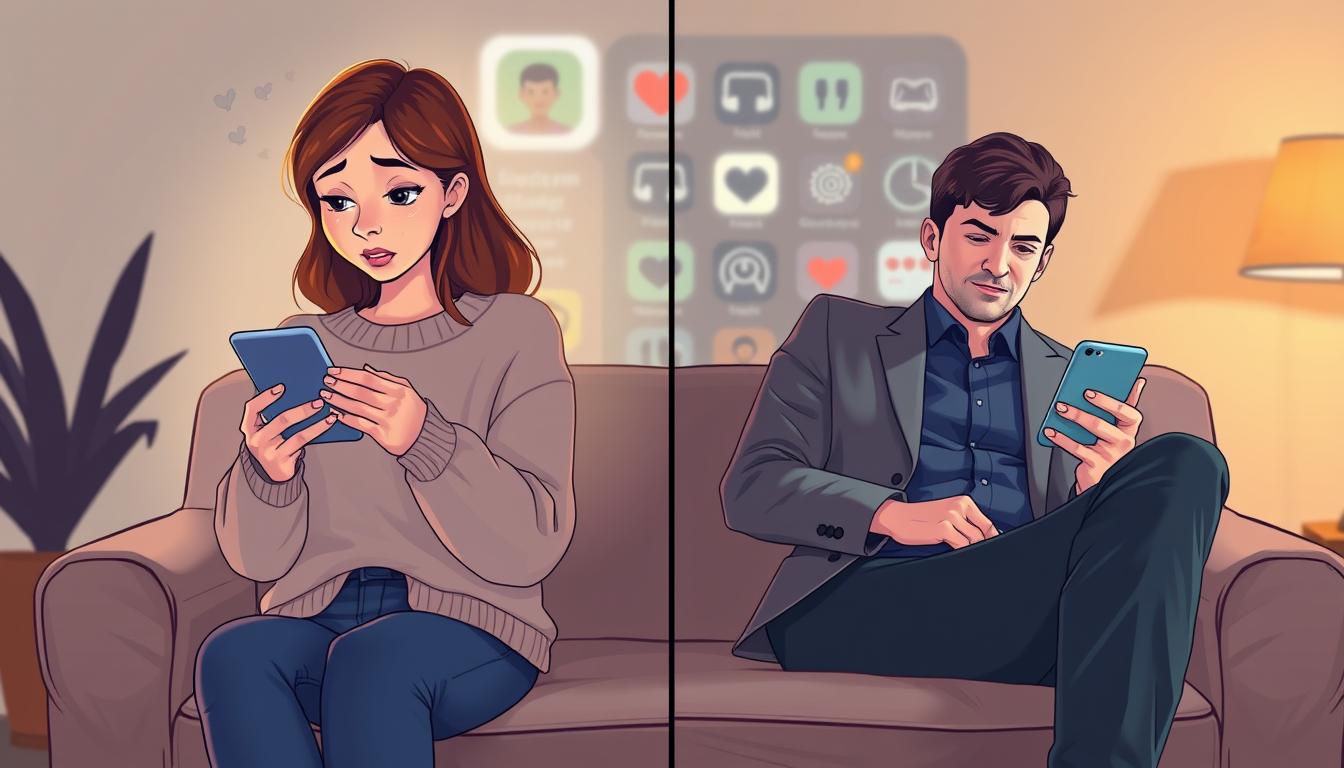
How does your emotional style shape online romance? This section frames the central question: why some people rush to swipe while others scroll without connecting. Researchers link attachment patterns to clear behaviors on platforms. Higher anxious tendency often drives more active use because the digital world can feel safer from explicit rejection.
By contrast, avoidant tendencies predict less use and more guarded profiles. Many avoidant users report aimless scrolling, prioritizing looks, and hesitating to reply to limit vulnerability. Platform choices also vary: some services attract fast-moving users, others favor deeper matching and slower exchange.
This article pairs research and first-person accounts to show how expectations, messages, and selection shape real relationships today. Read on for definitions, current research, behavior patterns, and practical steps to use technology more intentionally and reduce burnout in modern life.
Why attachment styles matter on dating apps today
How you connect online often maps back to core emotional patterns that shape choices and pace. People with anxious tendencies often send more messages and move faster from chat to meetups, seeking reassurance. By contrast, those who lean avoidant may delay replies, limit disclosure, and prefer distance to manage discomfort.
The modern world of apps compresses time and multiplies options, which can intensify familiar habits. Over‑pursuit, message overwhelm, or prolonged scrolling are often digital versions of offline behavior.
Recognizing your pattern is a key step. When you know what drives your choices, you can align how you use dating apps with your relationship goals and reduce miscommunication with others.
These insights apply across stages—from first messages to meeting in person—and remind us that people blend traits and change over time. The aim is practical awareness, not rigid labels, so you can protect your energy and focus on higher‑quality relationships.
The landscape now: research, definitions, and how online behavior mirrors attachment
U.S. usage patterns reveal clear age and marital trends that shape online interaction.
About 53% of people under 30 have tried a dating app, versus 37% of those 30–49, 20% of 50–64, and 13% of those 65+. Men report slightly higher use than women (34% vs. 27%).
Never‑married adults report roughly 52% use, while married adults report about 16%. These gaps show who most often navigates profile volume and message flow.
Quick primer on the four attachment orientations
Secure people are comfortable with closeness and independence. Anxious individuals seek reassurance and worry about abandonment. Avoidant people value autonomy and may downplay needs. Fearful‑avoidant types want closeness but pull away, creating push‑pull patterns.
How online behavior maps to offline patterns
Research finds anxious users cast wider nets and prefer fast replies to reduce uncertainty. By contrast, avoidant attachment often leads someone to limit exposure or delay responses to avoid intimacy pressure.
The app environment—easy choice, quick judgments, and sporadic feedback—amplifies these tendencies. Message overload can make women feel overwhelmed while message scarcity can make men feel insecure.
Takeaway: Noting your default online habits is a first step to aligning short‑term use with longer‑term relationship goals and healthier interactions today.
What the research says about attachment and dating apps
Studies show core emotional patterns shape whether people dive into profiles or stay off the platforms entirely.
Likelihood of app use: anxious vs. avoidant tendencies
Higher anxious attachment scores predict a greater chance that someone will sign up for a dating app.
Anxious users often cast a wider net and respond quickly to reduce uncertainty. The online shield lowers fear of direct rejection and increases outreach to others.
By contrast, people with avoidant attachment tend to skip apps more often. They report less enthusiasm for online communication and may prefer to keep emotional distance.
Research finds anxious-leaning users gravitate toward Tinder and Plenty of Fish, where fast matches and volume feel useful.
Avoidant-leaning people favor OkCupid, which offers deeper matching and fewer random contacts, matching their preference for curated interaction.
Why people use—or avoid—these services
Common reasons to use dating apps include meeting others, convenience, fun, sex, boredom, and coping with loneliness.
Common reasons to avoid them include trust concerns, preferring in-person chemistry, belief that platforms skew toward hookups, limited time, or not seeking a partner.
Takeaway: Match your platform choice and feature use to your emotional needs and relationship goals to avoid pitfalls like early over‑investment or avoidance that blocks opportunities.
How anxious and avoidant attachment show up while using dating apps
Small choices—when to reply, what to reveal—show whether someone leans toward pursuit or retreat.
Anxious tendencies: fast moves and frequent checks
People with anxious attachment often cast wider nets and move quickly from chat to meetup. They send more messages, check profiles often, and lower selectivity to increase chances of contact.
Gaps in replies can spike worry and amplify fear of rejection. The reward loop of matches and likes fuels repeated checking for reassurance.
Avoidant tendencies: scrolling, surface focus, and delay
Avoidant users report endless scrolling and a focus on looks or filters to keep interactions shallow. They delay replies and stall plans to keep distance.
Sometimes they self-sabotage by reframing discomfort as incompatibility to justify pulling away.
Secure versus fearful-avoidant patterns
Secure individuals balance openness with boundaries and pace conversations steadily. That steady way builds clearer signals for potential partners.
Fearful-avoidant people swing between intense approach and sudden retreat, creating push‑pull cycles that confuse others.
Why design matters: Swipes, intermittent rewards, and quick matches can reinforce validation-seeking for anxious users and habitually distant behavior for avoidant users.
Recognizing your pattern helps. Anxious users can set pacing and boundaries. Avoidant users can try small disclosures and structured next steps. Mindful checks during time on the app help you notice genuine connection versus reactions driven by fear.
Attachment-informed strategies for using dating apps with intention
Use simple, repeatable habits to steer online interactions toward real connection. Small rules reduce reactivity and help you choose partners with care. Below are practical steps tailored to common patterns, plus general habits to protect time and clarity.
If you’re anxiously inclined
Slow your message cadence. Set a cooling-off checkpoint before meeting or sharing contact details. Reality-test spikes of worry with a friend, journal, or a short call with a therapist.
If you lean avoidant
Share one small, meaningful detail early and list intentions on your profile. Cap swiping time and focus on a few deeper conversations rather than broad browsing.
If you’re fearful-avoidant
Journal triggers after interactions. Practice clear boundaries and pace intimacy with explicit check-ins to break the approach/withdraw loop.
If you’re secure
Balance intuition with objective signals like consistency and follow-through. Model calm communication and set norms that invite healthy partnerships.
Practical habits: time-box app use, batch replies, use profile prompts and video chat, and debrief after dates. If patterns feel stuck, short-term therapy or coaching can speed change and improve how you use dating tools and meet partners.
attachment styles dating apps: aligning platforms, features, and preferences
Choosing the right service and settings helps turn noisy swiping into clearer signals.
Choosing apps and features that fit your attachment style and relationship goals
Map platforms to needs. If you want depth and structure, favor services with prompts, questionnaires, and longer bios. OkCupid’s detailed matching often fits people who prefer richer context.
For pace and volume, Tinder and Plenty of Fish give broad reach. Anxious-leaning people often pick these for faster matches, but add prompts or limited time rules to avoid validation loops.
Practical tip: use prompts (Bumble), intention labels, and video dates to screen for values before meeting. These features help align preferences and reduce wasted time.
Managing sex, rejection, and intimacy signals in an online-first world
Be explicit about expectations in your profile and early messages. Clear language around sex and intimacy prevents misreads and cuts down on ambiguous signals.
Treat rejection as data, not identity. Turn off noncritical notifications and schedule short check-ins with a friend to process reactions.
Use match vetting tools—voice prompts, conversation starters, and intention labels—to confirm compatibility before investing emotional energy. Experiment across platforms, keep what works, and reassess preferences as your goals change.
From swiping to real connection: reducing self-sabotage and building healthier relationships
Small shifts in how you use technology can stop patterns that sabotage relationships. Start by treating the process like a short experiment: set clear goals, track results, and adjust what doesn’t work.
Set intentions, refine criteria, and focus on fewer, higher-quality matches
Invest in yourself first: clarify values, list core needs, and be honest about what you want in life and love. Then state those intentions on your profile so others know your priorities.
Refine criteria by separating must-haves from nice-to-haves. Broaden filters that are overly narrow and avoid endless perfection-seeking. Embrace satisficing—pick partners who meet core needs rather than chasing an ideal.
Improve profiles with specific interests and a touch of vulnerability. Share one real story or value. That small openness helps build trust and weeds out mismatches fast.
Focus on fewer conversations. Time-box your use of dating apps and pause swiping to invest time in deeper chats that test compatibility beyond photos and quick lines.
Practical tactics: mute notifications, schedule weekly reflection, and mark progress. If you see repeating patterns, brief therapy or coaching can align your attachment style with healthier relationship habits.
Moving forward with clarity and care in your digital dating life
Moving forward with clarity and care in your digital dating life
Shift small daily habits to align your use of dating apps with your goals and emotional needs. Tailor platform choices, pacing, and messages so each match serves a clear purpose.
Check in with yourself regularly. Update your view of what you want, notice what triggers fear or withdrawal, and adjust the way you use services as your confidence grows.
If patterns stall progress, consult a therapist or try short therapy sessions. Professional support helps reshape habits and turns anxious avoidant attachment into more secure engagement.
With consistent, gentle changes and curiosity about your responses, the digital world today can become a tool for real connection, not constant stress.